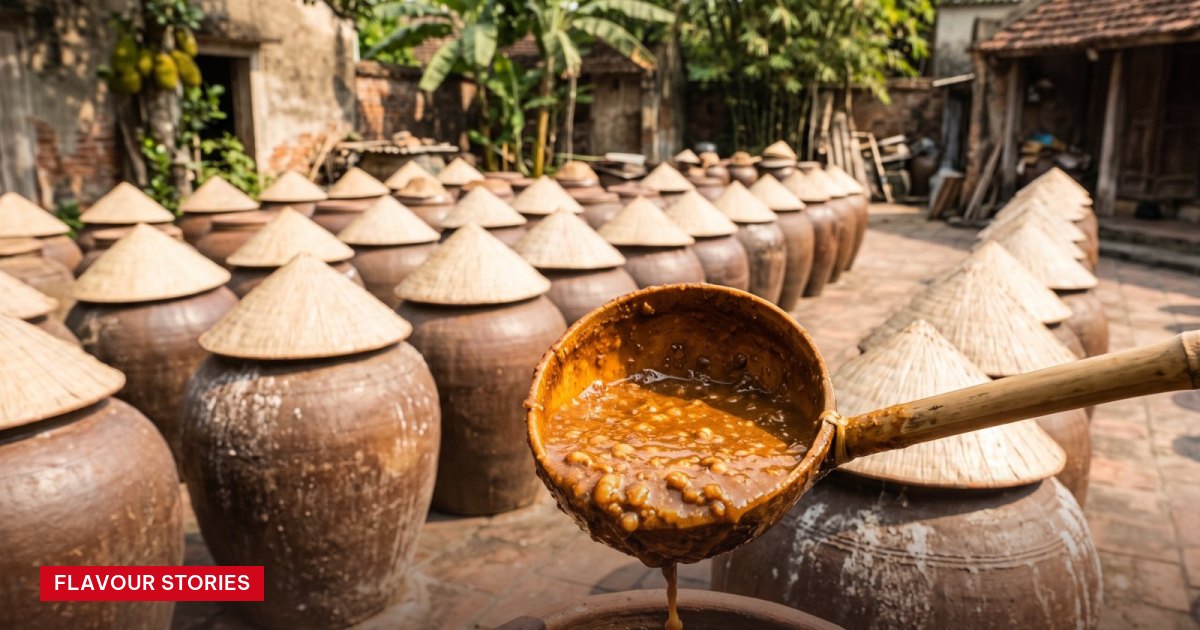
Ban soy sauce (tương Bần) is a fermented soybean condiment from Ban village in Hung Yen, northern Vietnam. Makers mould glutinous rice, combine it with soybeans, salt and water, then ripen it in jars in the sun for two to six months, producing a mellow, salty-sweet dip.
For importers and brands, the interesting part is how much the published accounts of this sauce differ. Comparing them shows which details are settled, which are local tradition, and which a buyer should pin down in writing before calling a product “Ban-style”.
1. Where does Ban soy sauce come from?
Ban soy sauce comes from Ban village, which Vietnam Airlines’ Heritage magazine places in Ban Yen Nhan ward, My Hao town, Hung Yen province. VOV puts the village about 25 km from Hanoi. English sources call it Ban soy sauce, soya sauce or fermented soybean paste, so it helps to search all three names when sourcing.
1.1 How old is the tradition?
Nobody can give a firm date from the published accounts. Heritage writes that it has been a staple since as early as the 12th or 13th century, VOV says the craft is believed to be hundreds of years old, and the Vietnam News Agency describes it as a delicacy of northern Vietnam since the end of the 19th century. Treat any exact founding date on a label or sales sheet with caution.
The commercial history is clearer. Heritage says the sauce began selling along National Route 5, between Hanoi and Hai Phong, by the mid-1930s. VOV adds that it is offered to ancestors in rituals and festivals as a wish for health and wealth.
1.2 How is Ban soy sauce made?
It is made in two stages: glutinous rice is moulded first, then fermented with soybeans, salt and water in jars in the sun. The sources agree on that outline but not on the details, as this comparison shows.
| Step | Vietnam News Agency | VOV | Tasting Table / Heritage |
|---|---|---|---|
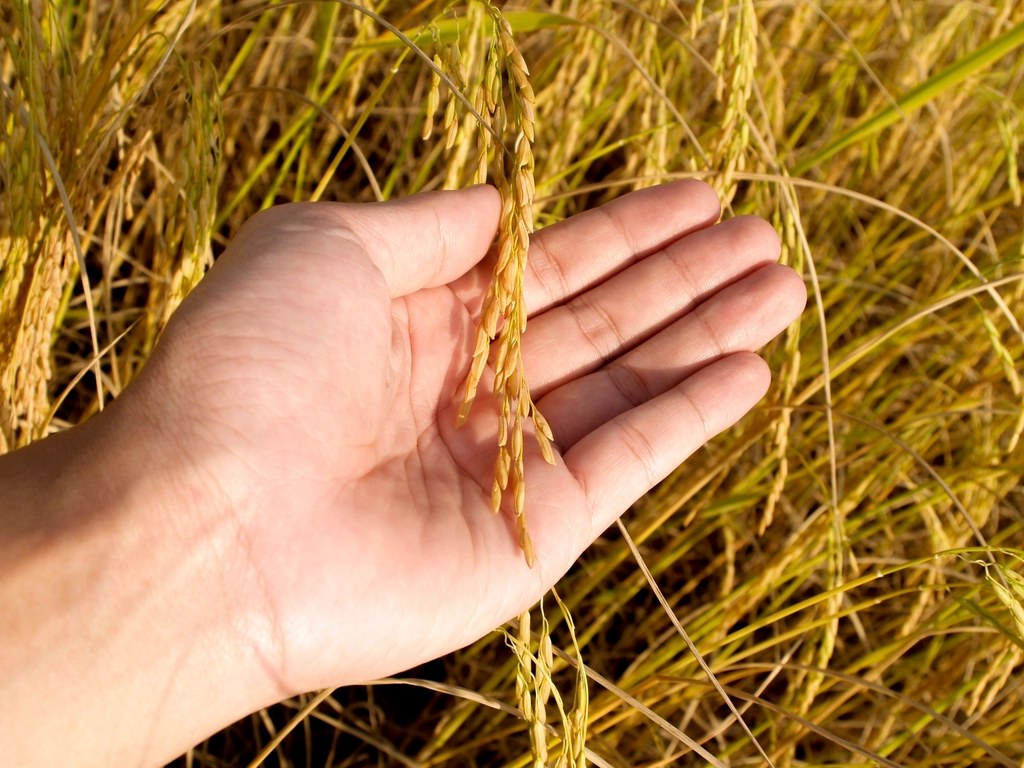
| Soybeans | Main ingredient; preparation not described | Soaked overnight, cooked, ground | Tasting Table: roasted deep brown, soaked in a jar for a week or longer |
| Moulding the rice | Boiled rice left three days on bamboo trays under longan or sweet potato leaves, until yellow | Starter added, then 2–3 days of fermentation, stirred daily | Tasting Table: cooked, dried in a basket until yellow, then mashed |
| Stirring in the jar | Every two days, for about a minute | Mornings and afternoons | Tasting Table: regularly |
| Time in the jar | Two to six months | At least two to three months | Heritage: two to six months, sometimes up to two years |
Local elders quoted by Heritage set the strictest standard: village-grown rice and soybeans, water from the ancestral Danh Well, Hai Hau salt and Tho Ha jars. Scale can be substantial, too. VOV reports one workshop running around 800 jars of 100–110 litres each. In the south, the flood-season fish paste mam ca linh shows a similar spread of ripening times between published accounts.
2. Flavour and how it is used
Expect a dark brown sauce that is milder and sweeter than standard soy sauce. Tasting Table calls it less salty and milder than American grocery-store soy sauce, with a lightly sweet finish, while Heritage describes it as nutty and slightly salty. The Vietnam News Agency also notes a slightly unpleasant odour, which matters if you plan to sell to shoppers who have never tried it.
It is served with fried tofu and boiled water spinach, according to Heritage, and with meats, tofu, vegetables and noodles, according to Tasting Table. VOV adds that part of the fermented sauce can be filtered and cooked down into a black soy sauce.
| Key fact | Detail |
|---|---|
| Region | Ban village, Hung Yen province, northern Vietnam |
| Main ingredients | Soybeans, glutinous rice, salt, water |
| Vessel | Ceramic or terracotta jars; Tho Ha jars by local tradition |
| Fermentation | Sun-ripened, typically two to six months |
| Flavour | Mild, nutty, lightly sweet, slightly salty |
| Typical uses | Dip for fried tofu, boiled vegetables and meats; noodles |
| Traditional keeping | Up to three years in good conditions (Vietnam News Agency) |
| Geographical indication | Not mentioned in the sources reviewed; check with Vietnam’s IP office |
3. From traditional kitchen to packaged product
Turning a sun-ripened village sauce into a repeatable product means choosing what to keep and measuring what the jar used to decide. These are the points we would raise with any manufacturer:
- Name your reference process. Roasted or unroasted soybeans, and two months or six, will not give the same sauce. Write the choice into the brief so samples can be compared fairly.
- Specify results, not just time. VOV notes that more sunlight speeds fermentation, so calendar age alone will not guarantee consistency. Agree targets for colour, salt, pH and taste, then check each batch against them.
- Be careful with the name. The elders’ rules tie authentic Ban sauce to village ingredients and water. Take advice before using “Ban” on a product made elsewhere, and describe it accurately as a style if it is.
- Declare the soybeans. FDA lists soybeans among the nine major food allergens, so the US label must say so. Our guide to allergen labeling for Asian sauces covers the wording.
- Validate shelf life for your pack. The three-year figure describes traditional keeping, not your bottle or pouch. For the US, also check how FDA’s acidified foods rules apply, using pH and water-activity data.
CiCook manufactures Vietnamese dipping sauces and other sauce ranges under OEM, ODM and private-label models, with a COA for every batch.
FAQ
Is Ban soy sauce the same as regular soy sauce?
No. It is a Vietnamese tương made with moulded glutinous rice as well as soybeans, salt and water. Tasting Table describes it as less salty and milder than ordinary American grocery-store soy sauce.
How long does Ban soy sauce take to make?
Most accounts give two to six months in the jar after the rice is moulded. VOV says at least two to three months, and Heritage says some batches take up to two years.
Planning a fermented dip or a Vietnamese sauce range? Talk to our manufacturing team or message us on WhatsApp at +84 813 378 398.
References
- Vietnam News Agency, Happy Vietnam (11/03/2025): Soya sauce – a delicacy of Hung Yen
- VOV (14/12/2024): The making of fermented soybean paste in Hung Yen
- Heritage, Vietnam Airlines (03/03/2025): The flavor of the fields
- Tasting Table (4 February 2024): What is Ban soy sauce and what makes it unique?
- U.S. FDA: Food allergies
Compiled and edited by the CiCook editorial team from the sources listed under References. For information only; please check the original documents before making business decisions.