
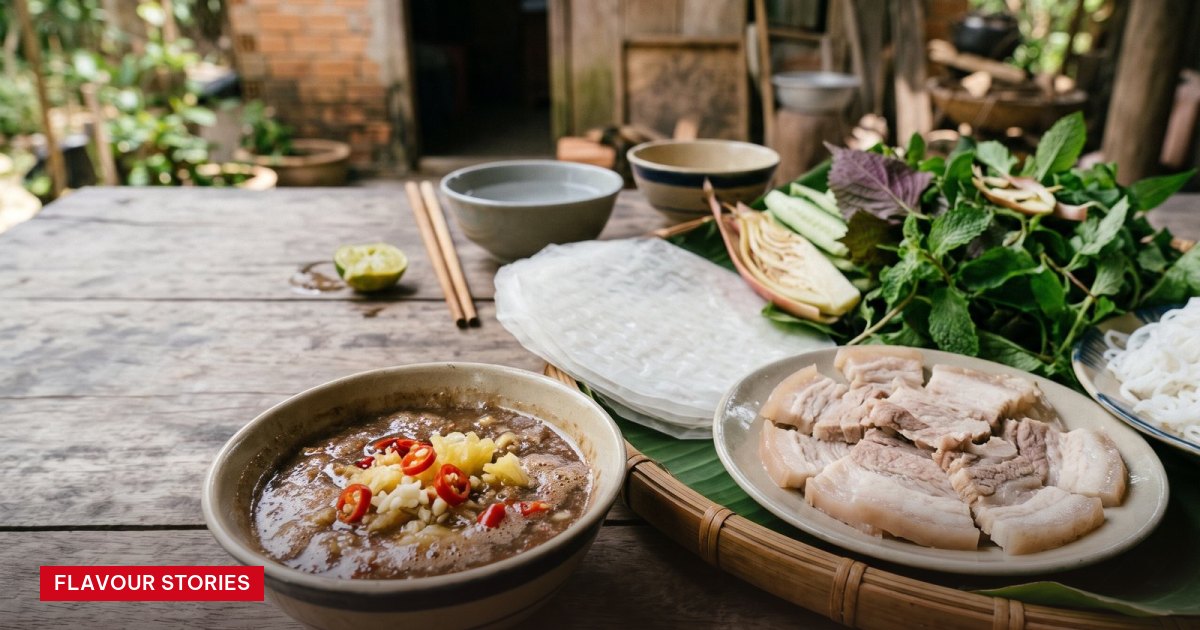
Mắm nêm is a fermented fish dip from central Vietnam, made by salting small fish such as anchovies and leaving them to ripen for months. Before serving it is mixed with pineapple, sugar, garlic and chilli, and eaten with bún mắm, roast pork and rice-paper rolls.
For buyers who know Vietnamese food through fish sauce, mắm nêm can be a surprise: thicker, cloudier and far more pungent, yet served as a sweet-sour table dip. This article explains where it comes from, how cooks in Da Nang and Quảng Nam make and mix it, how it differs from fish sauce, and what changes when a brand turns it into a packaged product.
1. Where does mắm nêm come from?
Mắm nêm is a speciality of Vietnam’s central coast, above all Da Nang and neighbouring Quảng Nam. A 2011 feature in Báo Đà Nẵng treats it as the same product locals call mắm cái, while VietNamNet describes it as a salted paste made from anchovies, with less salt than fish sauce, that is popular in central dishes.
Its roots are usually traced to the Cham people. The Wikipedia entry, citing several food historians, describes mắm nêm as a typical Cham food that entered Vietnamese cooking as Vietnamese settlers moved south. Nhân Dân similarly notes that, according to historical records, the fish-sauce craft of nearby Nam Ô village blends Cham practice with that of settlers from north of the Hải Vân Pass. These are historical interpretations, not documented recipes.
The dip has long travelled beyond the coast. Báo Đà Nẵng reported in 2011 that Da Nang producers were already shipping mắm cái to Sài Gòn, Bình Dương, Đồng Nai and Đắk Nông, where buyers mixed it sweeter than in Da Nang.

2. Flavour and how it is used
Mắm nêm tastes deeply salty and fermented on its own, so it is almost never eaten straight from the jar. Its character comes from small whole fish broken down with salt, which gives a thick, unfiltered paste rather than a clear liquid.
2.1 How is mắm nêm made?
Makers salt small fish and let the mixture ripen in jars or barrels. The 2011 Báo Đà Nẵng feature names anchovy (cá cơm) and small scad (cá nục) among the fish used, with the best catch around the third lunar month. It reports a traditional ratio of three parts fish to one part salt, while some makers now use four to five cups of fish per cup of salt.
According to the same report, some households add galangal, ginger, garlic or chilli. The paste can be used after about three months and grows softer and richer with longer ageing; a quick version is ready in roughly a week. These figures come from producers interviewed in one 2011 report and vary from household to household.
2.2 How is mắm nêm mixed and served?
Cooks strain out the fish residue and stir in chilli, garlic, sugar, lime or lemon juice and finely chopped pineapple, as described by the Da Nang tourism portal Danang Fantasticity. Báo Đà Nẵng lists lime slices, chilli, garlic and pineapple, and Wikipedia notes that mixing the paste with sugar, pineapple and spices gives the prepared dip known as mắm nêm pha sẵn.
The best-known dish is bún mắm: rice vermicelli with boiled or roasted pork, young jackfruit salad, roasted peanuts and fresh greens, topped with the mixed dip and a chilli paste of red chillies fried with peanut oil, garlic and sugar. Quảng Nam diners often add whole green chillies. The dip also goes with roast pork and with pork wrapped in rice paper (bánh tráng cuốn).
| Key fact | Detail |
|---|---|
| Other name | Mắm cái (Da Nang usage) |
| Region | Central Vietnam, especially Da Nang and Quảng Nam |
| Main ingredients | Small fish such as anchovy (cá cơm) and small scad, plus salt |
| Traditional ratio | 3 parts fish to 1 part salt; some makers use 4–5 parts fish (2011 report) |
| Ripening | Usable after about 3 months; quick version in about 1 week |
| Flavour | Strongly pungent and salty; sweet-sour once mixed |
| Table mix | Pineapple, sugar, garlic, chilli, lime or lemon |
| Typical dishes | Bún mắm, roast pork, rice-paper pork rolls |
| Historical roots | Usually attributed to Cham cuisine |
2.3 What is the difference between mắm nêm and fish sauce?
Fish sauce is the clear liquid drawn off after a long fermentation, while mắm nêm keeps the fish solids and ripens for a shorter time. VietnamPlus reports that Nam Ô fish sauce uses ten parts anchovy to four parts salt for 12 to 18 months, and Phú Quốc fish sauce three parts anchovy to one part salt for 10 to 15 months. Our article on how Phu Quoc fish sauce is fermented in wooden barrels covers that product in detail.
| Aspect | Mắm nêm | Fish sauce (nước mắm) |
|---|---|---|
| Form | Thick, unfiltered paste with fish solids | Clear liquid drawn off the fermented fish |
| Fermentation | About 3 months (Da Nang producers, 2011) | 10–15 months (Phú Quốc); 12–18 months (Nam Ô) |
| Salt | Less salt than fish sauce | 3:1 (Phú Quốc) or 10:4 (Nam Ô) fish to salt |
| At the table | Mixed with pineapple, sugar, garlic, chilli | Used as a seasoning and as a base for dipping sauces |
3. From traditional kitchen to packaged product
A packaged mắm nêm already exists in Vietnam as the ready-mixed mắm nêm pha sẵn, so the question for a brand is less whether it can be bottled than which version to bottle. These points help when briefing a manufacturer:
- Choose the format first. A plain fermented paste suits cooks who season it themselves; a ready-mixed dip with pineapple, sugar, garlic and chilli suits consumers. The two need different recipes, shelf-life testing and labels.
- Set sweetness by market. The same Da Nang paste was mixed sweeter for southern buyers, so test the balance with your own customers before fixing the formula.
- Specify texture. Home cooks strain out fish residue; state whether the finished dip should be smooth or keep fine fish particles and pineapple pulp.
- Treat aroma as a packaging requirement. A strongly pungent product needs closures and outer packing that keep the smell in during shipping and on the shelf; check this at sample approval.
- Plan the label for fish. Fish is a declared allergen in many markets; our FDA allergen labeling checklist for Asian sauces sets out what US importers check.
CiCook manufactures regional Vietnamese dipping sauces under OEM, ODM and private-label arrangements, in a facility registered with the US FDA and certified to ISO 22000:2018. Its range of dipping sauces and ready-mixed dips shows the product types it makes.
FAQ
Is mắm nêm the same as fish sauce?
No. Fish sauce is a clear liquid drawn off after 10 to 18 months of fermentation. Mắm nêm is a thicker paste that keeps the fish solids, uses less salt, ripens in about three months and is mixed with pineapple, sugar, garlic and chilli before eating.
How do you mix mắm nêm for dipping?
Strain out the fish residue, then stir in finely chopped pineapple, sugar, minced garlic, chilli and a squeeze of lime or lemon. Adjust the sugar to taste: diners in southern Vietnam usually prefer it sweeter than cooks in Da Nang.
Developing a fermented fish dip for your market? Send a brief to our sauce team or message us on WhatsApp +84 813 378 398.
References
- Báo Đà Nẵng (20/8/2011): Chuyện mắm cái
- Danang Fantasticity (29/8/2024): Bún mắm thịt heo, or Vietnamese fermented fish noodle soup with pork
- VietNamNet Global (10/4/2021): Fish sauce enjoys a taste of success
- VietnamPlus (13/9/2024): Năm Di sản Văn hóa Phi vật thể Quốc gia trong lĩnh vực ẩm thực
- Nhân Dân (21/4/2023): Gìn giữ hương vị sản phẩm truyền thống nước mắm Nam Ô
- Wikipedia (accessed 16/11/2026): Mắm nêm
Compiled and edited by the CiCook editorial team from the sources listed under References. For information only; please check the original documents before making business decisions.