
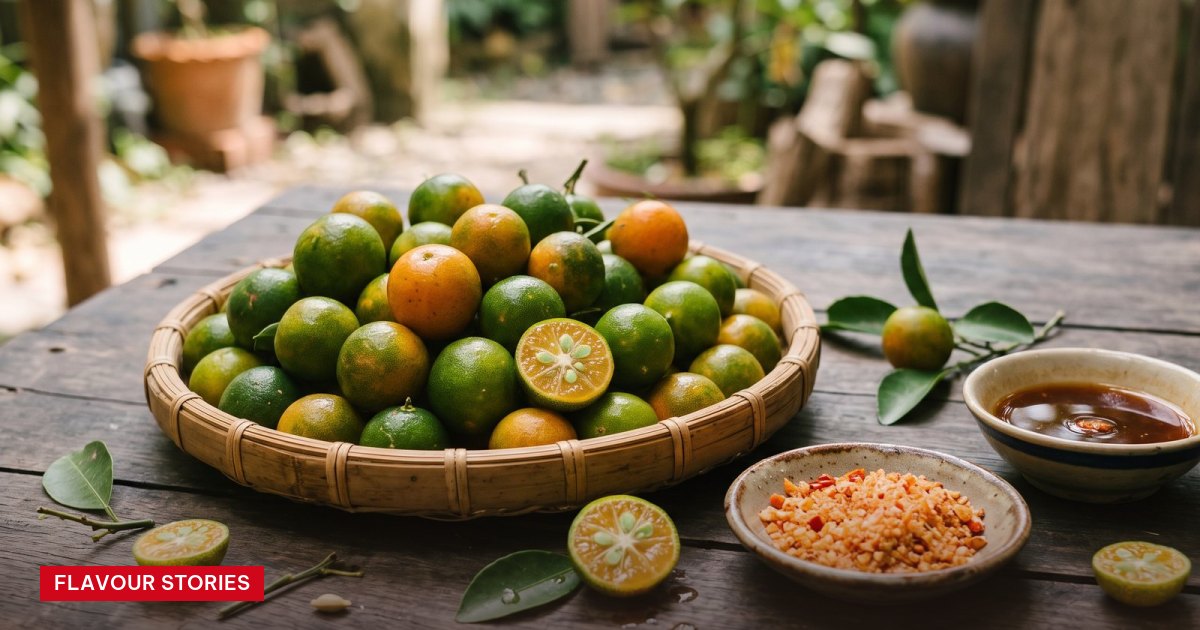
Tắc, also called quất and often sold in English as Vietnamese kumquat, is calamansi (Citrus × microcarpa), a natural citrus hybrid with kumquat in its parentage. Its gentle, fragrant sourness anchors seafood dips such as nước mắm tắc, where the juice is squeezed fresh and usually added last.
In Vietnamese seafood cooking the small green-and-orange fruit turns up again and again, squeezed into fish sauce dips and stirred into sauces for snails and crab. Importers meet it later, on a spec sheet, under three or four different English names. This article untangles the names, shows how Vietnamese recipes use the fruit, and sets out what changes when a tắc-based dip moves from the kitchen into a bottle.
1. What is tắc, and is it really a kumquat?
Tắc is not a true kumquat but calamansi, also known as calamondin, botanical name Citrus × microcarpa. Vietnamese recipe writers use the two local names interchangeably: a VnExpress Cooking recipe lists “quất (tắc)”, while a Ngôi Sao recipe writes “tắc (quất)”.
The kumquat link is real but partial. The University of California, Riverside Citrus Variety Collection describes calamondin as an acid fruit, probably of Chinese origin and most commonly grown in the Philippines, believed to be a natural hybrid “with kumquat in the parentage”. NC State Extension says it is thought to be a cross between mandarin orange and kumquat, which is why it was previously classified as × Citrofortunella.
A 2023 review in the journal Molecules notes that the fruit is used as a cooking ingredient in Vietnam, Malaysia, Singapore, China and Indonesia. Its main acids are citric, ascorbic and dehydroascorbic acid, and D-limonene is the main constituent of the peel’s essential oil, the source of its distinctive aroma.
| Key fact | Detail |
|---|---|
| Vietnamese names | Tắc, quất |
| English names | Calamansi, calamondin; often marketed as Vietnamese kumquat |
| Botanical name | Citrus × microcarpa (formerly × Citrofortunella microcarpa) |
| Parentage | Natural hybrid; thought to be mandarin × kumquat |
| Probable origin | China; grown most widely in the Philippines |
| Fruit | Small, thin fragrant peel, acidic pulp; peel oil rich in D-limonene |
| Fruiting | Flowers several times a year; fruit can take up to a year to mature |
| Typical Vietnamese uses | Seafood and snail dips, nước mắm tắc, sauces for stir-fried shellfish |
2. Flavour and how it is used
Tắc is sour, with a fragrant peel. A Ngôi Sao recipe for snails in tắc fish sauce describes its sourness as gentle and clean, “not as harsh” as tamarind or lime. That makes it a different tool from tamarind, the sour base of southern canh chua: tamarind is cooked into broths, while in the recipes below tắc is used raw or barely heated.
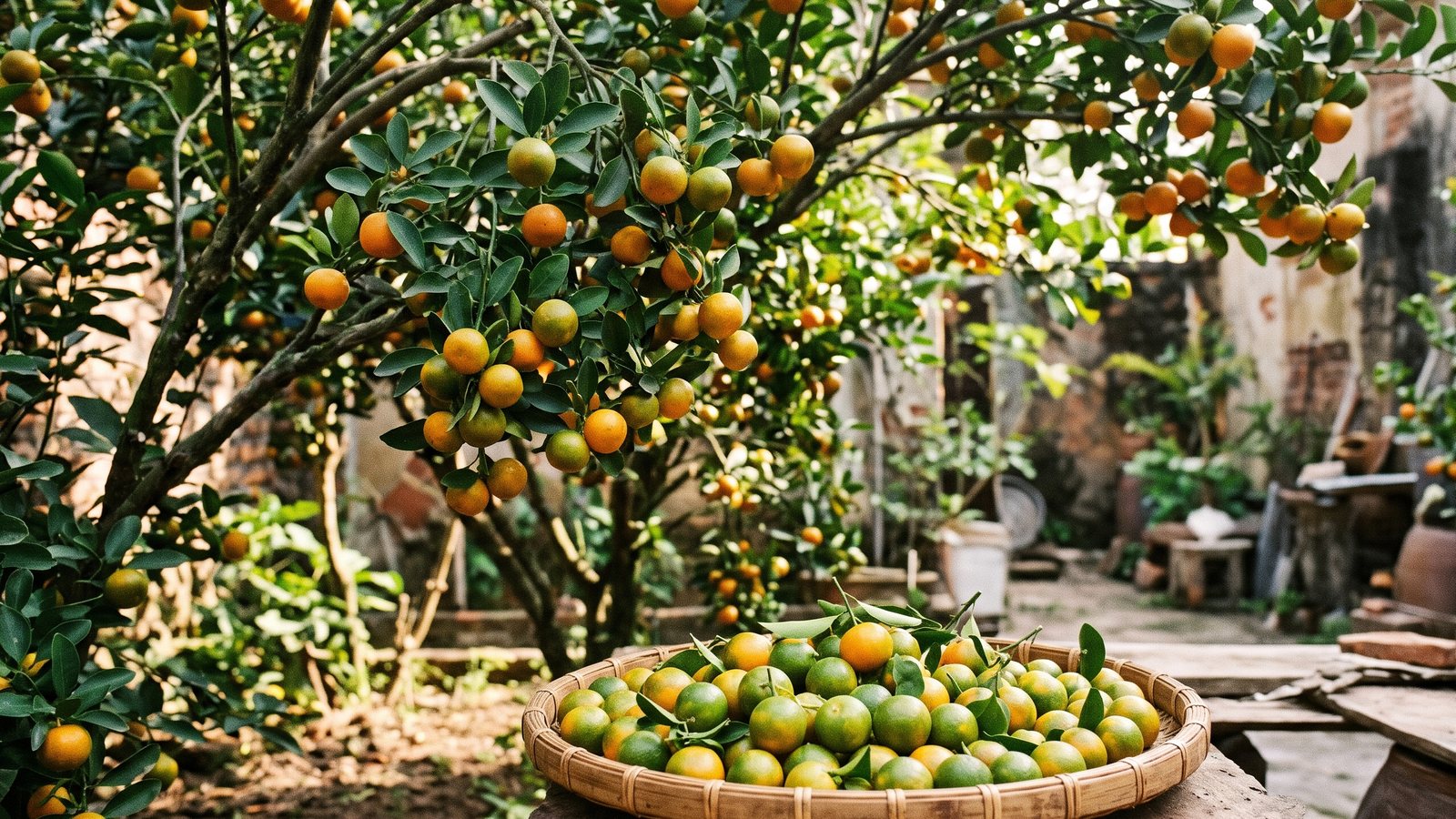
How much tắc goes into a Vietnamese dipping sauce?
Published recipes use tắc juice at roughly the same volume as fish sauce, and add it late. Three recipes from VnExpress and its Ngôi Sao section show the pattern:
| Dish | Tắc and main ingredients | When tắc goes in |
|---|---|---|
| Dip for boiled snails (VnExpress Cooking, 7/1/2022) | 50 g sugar, 50 ml fish sauce (30–40°N), 50 ml tắc juice, 150 ml water, plus garlic, ginger, lemongrass, chilli and shredded lime leaf | After the sugar water has boiled and cooled |
| Ốc hương in tắc fish sauce (Ngôi Sao, 28/7/2020) | Juice of 10 tắc for 500 g snails, with fish sauce, sugar, garlic and chilli | Last, stirred for about 2 minutes before the heat goes off |
| Dip for crab and ghẹ (Ngôi Sao, 18/1/2022) | 15 g thinly sliced tắc, 50 g sugar, 50 g chilli sauce, 50 g vinegar, 25 g fish sauce, 10 g garlic, 3 lime leaves | Stirred in raw at the end |
The first recipe’s ratio, 1:1:1:3 of sugar, fish sauce, tắc juice and water, is a useful benchmark for anyone briefing a sauce developer. In the crab dip, tắc goes in as thin slices, so the fragrant peel becomes part of the flavour.
3. From traditional kitchen to packaged product
A tắc dip mixed at home or at a stall is made to be eaten fresh; a bottled one must taste the same months later. These points help a brand brief a manufacturer clearly.
- Fix the name before the label. “Kumquat”, “calamansi” and “calamondin” may mean different fruit to different buyers. Put Citrus × microcarpa on the specification and agree the English name with the importer.
- Choose the juice format. Fresh-squeezed, frozen juice or concentrate each behave differently; recipes add tắc last because its fresh aroma is the point, so taste-test any heat step against a fresh reference.
- Decide on peel. Slices or zest bring the peel’s aroma; juice-only dips taste of the pulp alone. Agree which one on the approved sample.
- Check acidity rules early. A dip that relies on citrus juice to acidify low-acid ingredients may need review under FDA acidified foods rules for US-bound sauces before the first shipment.
CiCook makes dipping sauces, hotpot bases and BBQ marinades under OEM, ODM and private label in an FDA-registered, ISO 22000:2018-certified facility. Its range of Vietnamese dipping sauces and rice products shows the current packaging formats.
FAQ
Is Vietnamese tắc the same as kumquat?
Not exactly. Tắc is calamansi (Citrus × microcarpa), a natural hybrid believed to have kumquat in its parentage, probably crossed with mandarin. It is often sold as “Vietnamese kumquat”, but it is a hybrid rather than a true kumquat.
How do you make nước mắm tắc?
One VnExpress recipe mixes sugar, fish sauce and tắc juice in equal parts with three parts water: 50 g, 50 ml, 50 ml and 150 ml. The sugar water is boiled and cooled first, then fish sauce, tắc juice, garlic, chilli and lime leaf go in.
Developing a citrus dipping sauce for your market? Send a brief to our sauce team or message us on WhatsApp +84 813 378 398.
References
- UC Riverside Citrus Variety Collection (accessed 14/11/2026): Calamondin, CRC 2592
- NC State Extension Gardener Plant Toolbox (accessed 14/11/2026): Calamansi, Citrus x microcarpa
- Molecules via PubMed Central (12/4/2023): Phytochemicals, bioactive properties and commercial potential of calamondin fruits, a review
- VnExpress Cooking (7/1/2022): Cách luộc ốc giòn ngon, nước chấm đậm đà
- Ngôi Sao – VnExpress (28/7/2020): Ốc hương xốt nước mắm tắc
- Ngôi Sao – VnExpress (18/1/2022): Công thức pha 3 loại nước chấm hải sản
Compiled and edited by the CiCook editorial team from the sources listed under References. For information only; please check the original documents before making business decisions.