
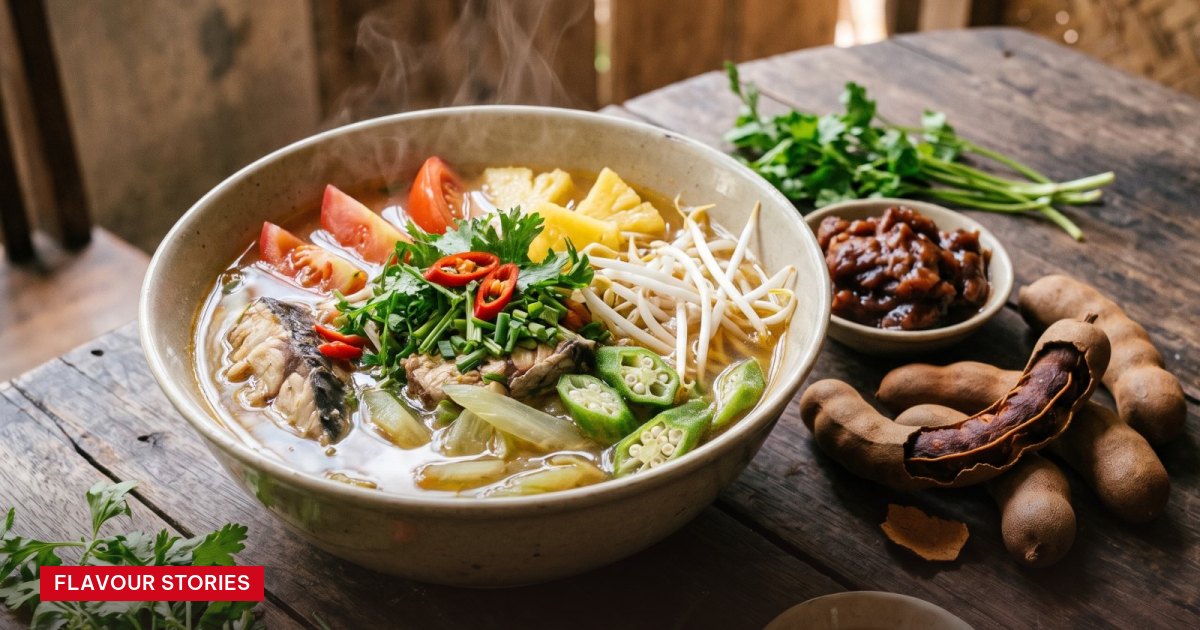
In Vietnam, tamarind (me) is a classic souring agent of southern cooking. Its sweet-sour pulp, strained into a juice, gives canh chua its sharp edge alongside pineapple and tomato, while young leaves, green fruit and salted flesh turn up in braises, dips, crab dishes and Tra Vinh’s iced tamarind drink.
1. Where does tamarind come from?
Tamarind is not native to Vietnam. Britannica describes Tamarindus indica as an evergreen tree of the pea family (Fabaceae), native to tropical Africa and now widely cultivated in tropical and subtropical regions for its edible fruit.
Kew’s Plants of the World Online is more cautious: it says the tree’s origin is uncertain because it has been grown since ancient times, and that it is apparently native to tropical Africa and Madagascar. Today it is found throughout the tropics.
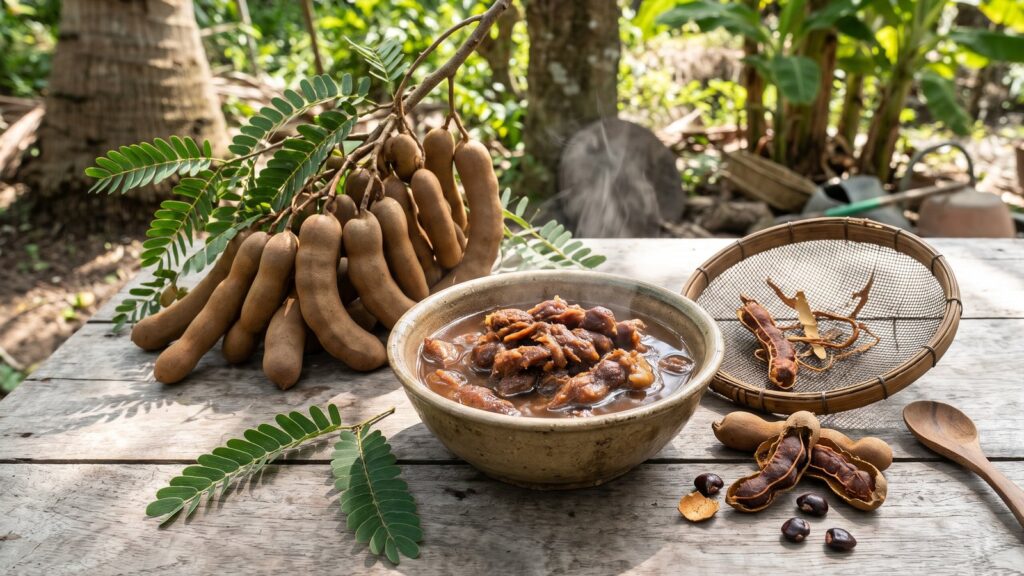
The fruit is a plump pod, 7.5–24 cm long, that does not split open. Inside, one to twelve flat seeds sit in a soft, brownish pulp that Britannica calls sweet and sour. Elsewhere in the world, Kew notes, that pulp goes into curries, pickles, confectionery and fermented drinks.
2. How is tamarind used in Vietnamese cooking?
Tamarind in Vietnamese cuisine is mostly a sour note, and the best-known example is canh chua. A VnExpress recipe from October 2024 cooks fish in tamarind juice with pineapple, then adds tomato, okra, taro stem (doc mung) and bean sprouts, finishing with herbs and chilli.
The same article draws a regional line. Southern canh chua blends several sour sources with salt, sugar and heat, while northern sour soups usually rely on one, such as taro stem, thanh tra fruit, fermented rice or rice vinegar. Tamarind sits firmly on the southern side.
The soup also travels well. As VOV reported in July 2024, the food guide TasteAtlas ranked canh chua ca, which it described as usually made with a tamarind broth, eighth in a list of 57 fish soups.
2.1 Beyond the pulp: leaves, green fruit and salted flesh
Vietnamese cooks use more of the tree than the ripe pod. A 2004 VnExpress feature on tamarind dishes lists young leaves added straight to canh chua and served with banh xeo, green fruit boiled and strained for its sour liquid, and ripe flesh salted to keep it through the year.
Sour tamarind also seasons stir-fried crab and small crabs (cong), and becomes a dip for fried fish and braised linh fish. Mekong cooks braise linh fish with young tamarind, according to a Saigon Times food column, the same fish that becomes mam ca linh, the Mekong Delta’s flood-season fish paste.
That column also describes a canh chua of dried snakehead fish cooked with young tamarind shoots (dot me) and banana blossom, a dish it links to the Khmer soup xiem lo. On the sweet side, tamarind becomes candy, jam and Tra Vinh’s iced tamarind drink.
| Key fact | Detail | Source |
|---|---|---|
| Botanical name | Tamarindus indica, pea family (Fabaceae) | Britannica |
| Native range | Tropical Africa; Kew adds Madagascar and calls the origin uncertain | Britannica, Kew POWO |
| Fruit | Pod 7.5–24 cm, 1–12 seeds in soft, brownish, sweet-sour pulp | Britannica |
| Vietnamese name | Me (sour and sweet types are both used) | VnExpress 2004 |
| Parts used in Vietnam | Pulp and juice, young leaves and shoots, green fruit, salted ripe flesh | VnExpress 2004, Saigon Times |
| Typical dishes | Canh chua, stir-fried crab, dips for fried and braised fish, candy, jam, iced drink | VnExpress 2004 |
| Regional profile | Southern sour soups mix several sours; northern ones usually use one | VnExpress 2024 |
For seafood dips rather than broths, Vietnamese recipes often turn to a milder citrus: tắc, the calamansi sold as Vietnamese kumquat.
3. From traditional kitchen to packaged product
A tamarind soup base or dip has to reproduce a balance that home cooks adjust by taste. The points below are our reading of the sources for sauce buyers, not a production standard.
3.1 Which form of tamarind should the specification name?
Name the type and the form. The sources separate sour tamarind, used for cooking, from sweet tamarind, also used for jam, and they use pulp, leaves and green fruit for different dishes. Because a natural fruit varies from lot to lot, sourness and colour are best approved against a reference sample.
3.2 How do you keep the southern balance in a jar?
Judge the base on sour, sweet, salty and hot together, not on sourness alone, since that blend is what defines the southern style. Decide early which parts sit in the pack and which the cook adds fresh, such as pineapple, tomato, okra and herbs, and write that on the label instructions.
3.3 What should export buyers check?
Tamarind is seasonal, so ask how the raw material is secured outside the harvest. For the United States, a sour sauce may need to be assessed against FDA acidified foods rules for sauce importers before the first shipment.
CiCook produces hotpot bases, including a sour and spicy hotpot, and dipping sauces under OEM, ODM and private label in an FDA-registered, ISO 22000:2018-certified facility. Its sour hotpot bases and dipping sauces show the current packaging formats.
FAQ
What makes Vietnamese canh chua sour?
In the south, tamarind juice is the usual base, combined with pineapple and tomato. Cooks may also use lime, vinegar or fermented rice, and northern sour soups typically use a single souring ingredient.
Do Vietnamese cooks use tamarind leaves?
Yes. Young tamarind leaves and shoots go into canh chua, including a dried-snakehead version, and are eaten with banh xeo and other dishes as a sour herb.
Developing a tamarind-soured hotpot base or dipping sauce? Send your product brief to the CiCook team or message WhatsApp +84 813 378 398.
References
- Encyclopaedia Britannica (accessed November 2026): Tamarind
- Royal Botanic Gardens, Kew, Plants of the World Online (accessed November 2026): Tamarindus indica L.
- VnExpress (15 October 2024): Cách nấu canh cá chua kiểu Nam Bộ
- VnExpress (6 February 2004): Các món độc đáo từ me
- Saigon Times via Tuoi Tre (21 December 2013): Canh chua khô cá lóc, đọt me
- VOV (updated 16 July 2024): Vietnamese sweet and sour soup listed among world’s Top 57 fish soups
Compiled and edited by the CiCook editorial team from the sources listed under References. For information only; please check the original documents before making business decisions.