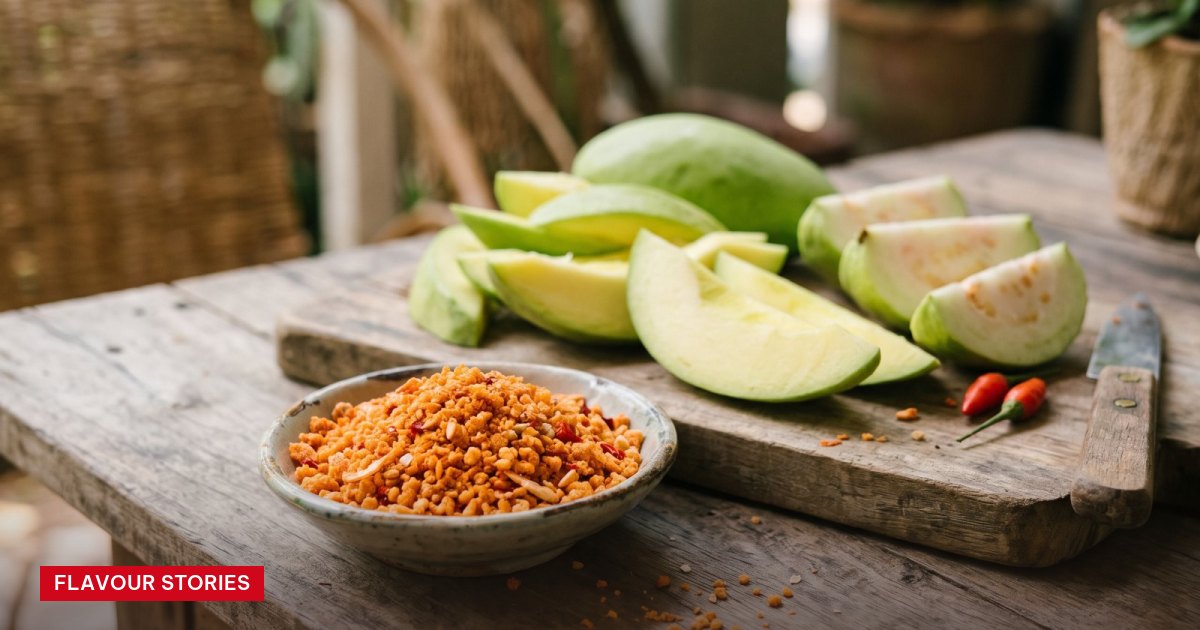
Tay Ninh shrimp salt (muối tôm) is a coarse, brick-red dip of salt, ripe red chilli, dried shrimp, garlic and lemongrass, roasted and dried until crisp. It is eaten with fresh fruit and rice paper snacks, and the craft behind it became national intangible cultural heritage in 2023.
It is one of Vietnam’s best-known table condiments, yet it comes from a province that, as Tạp chí Công Thương put it in 2017, borders Cambodia and has no sea. That paradox is the best way into the story, and it also explains several things a brand needs to know before turning shrimp salt into a packaged product.
1. Where does Tay Ninh shrimp salt come from?
Tay Ninh shrimp salt comes from Tay Ninh province in southern Vietnam, but none of its key ingredients do. Producers buy salt and dried shrimp from coastal provinces, and a folklorist quoted by Nhân Dân in March 2026 noted that the province had no coastline, no salt fields and no brackish-water shrimp, yet all three meet in this one dip.
Its origins rest on local accounts rather than written records. According to producers interviewed by Nhân Dân and Tạp chí Công Thương, families during the war years roasted salt with lemongrass and chilli and sent it to relatives in resistance bases, because it was cheap, easy to make and kept well. Dried shrimp was added later. The trade grew into a business after 1975, starting with a handful of households.
Religion shaped the recipe too. Most people in Tay Ninh follow Caodaism, and many eat vegetarian, so producers make shrimp-free chilli and lemongrass salts alongside the shrimp version, as both Việt Nam News and Nhân Dân report.
Official recognition came on 14 February 2023, when the Ministry of Culture, Sports and Tourism signed Decision 230/QĐ-BVHTTDL listing the traditional craft of making Tay Ninh chilli salt as national intangible cultural heritage, the province’s eighth such listing, according to Sài Gòn Giải Phóng. Tạp chí Công Thương counted 37 establishments with registered brands in 2023, a figure the provincial agriculture department repeated to Nhân Dân in 2026.
2. Flavour and how it is used
Shrimp salt is salty first, with chilli heat and the aroma of roasted garlic and lemongrass. Producers sell it in coarse, fine and very fine grades, and in three common styles: chilli-shrimp salt (mildly spicy, very salty), shrimp salt with fried shallot and garlic (less salty) and coarse red shrimp salt (less salty), as described by Nhân Dân and Tạp chí Công Thương.
2.1 How is shrimp salt made?
It is made by grinding chilli and dried shrimp, mixing them with salt, garlic and lemongrass, then roasting and drying the mix. The sources describe these steps:
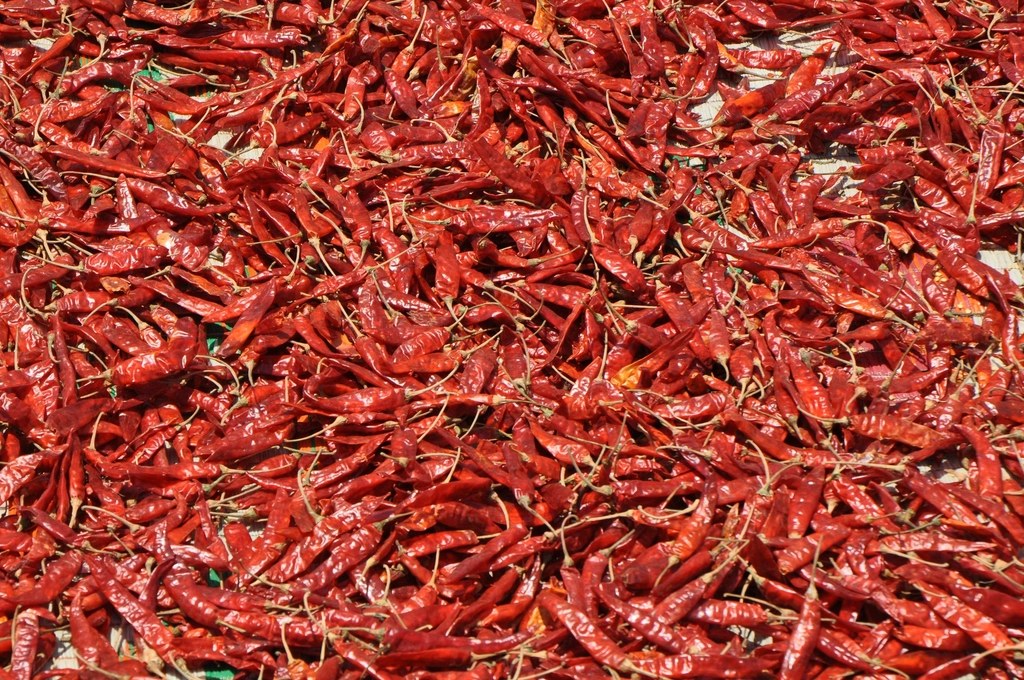
- Ripe red chilli is cleaned and dried until low in moisture; the dried shrimp must also be clean and dry. Producers quoted by Nhân Dân prefer brackish-water shrimp from Kien Giang and Ca Mau.
- Chilli and shrimp are ground fine and mixed with salt in a set ratio, then garlic and lemongrass are added. Some recipes also use sugar, MSG or carrot.
- The mix is pan-roasted, a step that “decides the quality of the salt grain”, according to Tạp chí Công Thương (2017). The target is a brick-red colour and a crisp, golden grain.
- After about a day of sun (the area gets more than six hours a day), the salt is oven-dried at 80–90°C for 12–15 hours, ground and passed under UV light, Tạp chí Công Thương reported in 2023.
Producers told Nhân Dân that the red-orange colour comes from the ingredients themselves, without dyes.
2.2 What do you eat shrimp salt with?
Most people eat it with fruit such as guava, apple and mango, and with rice paper snacks. Việt Nam News adds boiled vegetables, grilled squid, boiled pork and bánh tráng trộn (rice paper salad). One kiln owner told Sài Gòn Giải Phóng that about 80% of his output goes to bánh tráng trộn and bánh tráng phơi sương sellers, a natural pairing with Trang Bang’s dew-softened rice paper from the same province.
| Key fact | Tay Ninh shrimp salt |
|---|---|
| Main production areas | Go Dau, Trang Bang, Hoa Thanh and Tay Ninh city |
| Core ingredients | Salt, ripe red chilli, dried shrimp, garlic, lemongrass |
| Optional ingredients | Sugar, MSG, carrot, fried shallot |
| Process | Grind, mix, pan-roast, sun-dry, oven-dry at 80–90°C for 12–15 hours |
| Common styles | Chilli-shrimp, fried shallot and garlic, coarse red shrimp; shrimp-free vegetarian salts |
| Typical uses | Fresh fruit, rice paper snacks, boiled vegetables and meat, grilled squid |
| Recognition | National intangible cultural heritage, Decision 230/QĐ-BVHTTDL, 14 February 2023 |
| Registered producers | 37 establishments (2023 and 2026 reports) |
3. From traditional kitchen to packaged product
Shrimp salt is already a packaged product: Sài Gòn Giải Phóng and Tạp chí Công Thương both report exports to markets including the United States and Malaysia. For a brand developing its own version, the traditional method points to the specifications that matter most.
- Dryness is the shelf-life spec. The long sun and oven drying is what lets the salt keep. When scaling up, set a measurable moisture target and check it on every batch instead of judging by colour.
- Fix the shrimp source. Shrimp type and origin change both flavour and cost, so name them in the specification and approve any substitute before it is used.
- Declare the crustacean. Shrimp is crustacean shellfish, one of the nine major allergens under US rules, and the species must be named; see our guide to FDA allergen labeling rules for Asian sauces.
- Back up colour claims. If the label says “no added colour”, the red must come from chilli and shrimp alone, as Tay Ninh producers say theirs does.
- Plan grades and a vegetarian line. Coarse grains suit fruit dipping, fine grades suit mixing into snacks, and the Caodai shrimp-free tradition offers a ready model for a vegetarian variant.
CiCook produces a green chilli salt dip among its Vietnamese dipping sauces and chilli salt dips, made under OEM, ODM or private label. Every batch ships with a COA, and customer formulas are protected by NDA.
FAQ
What is Tay Ninh shrimp salt made of?
Salt, ripe red chilli, dried shrimp, garlic and lemongrass, with sugar or MSG in some recipes. The mix is pan-roasted, then sun-dried and oven-dried until crisp.
Is there a vegetarian version of shrimp salt?
Yes. Many people in Tay Ninh follow Caodaism and eat vegetarian, so producers also make shrimp-free salts flavoured with chilli and lemongrass.
Developing a chilli or shrimp salt for your own label? Reach our team through the ODM Seasoning contact page or on WhatsApp +84 813 378 398.
References
- Nhân Dân (01/03/2026): Về Tây Ninh tìm vị ngon của muối
- Tạp chí Công Thương (29/11/2023): Kỳ diệu muối ớt Tây Ninh
- Sài Gòn Giải Phóng (05/04/2023): “Vị ngọt” muối tôm ớt Tây Ninh
- Việt Nam News (28/03/2023): Shrimply delicious: Tây Ninh’s salty and spicy muối ớt tôm
- Tạp chí Công Thương (30/10/2017): Muối tôm Tây Ninh: đặc sản của vùng đất không có biển
Compiled and edited by the CiCook editorial team from the sources listed under References. For information only; please check the original documents before making business decisions.