
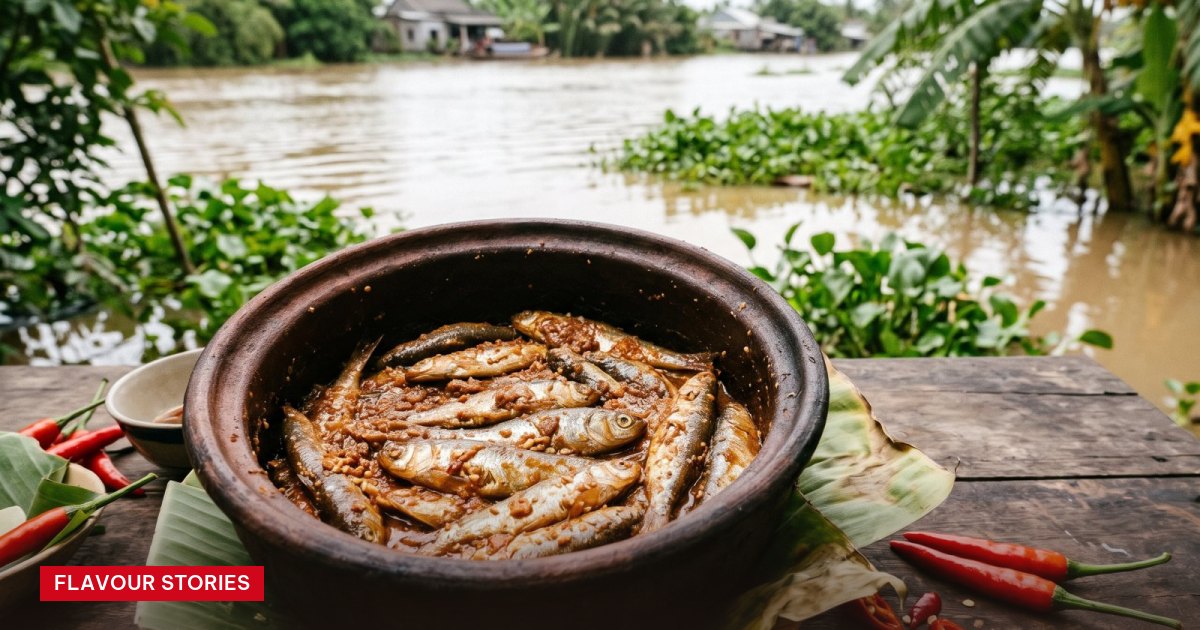
Mam ca linh (mắm cá linh) is a Vietnamese fermented paste made from linh, small carp that fill the Mekong Delta during the annual flood season. Preserved with salt and, in Chau Doc-style recipes, roasted rice powder and palm sugar, it gives lau mam hotpot its savoury depth.
For importers and brands, the useful part is how little of this paste is fixed. Published accounts disagree on the fish, the ripening time and even which paste belongs in the hotpot, so we compared them to show what a buyer should pin down in writing.
1. Where does mam ca linh come from?
It comes from the flooded fields of the upper Mekong Delta, above all An Giang province. Sài Gòn Giải Phóng (17 September 2017) says people around Châu Đốc and Tịnh Biên are well known for making paste from linh and other field fish. VOH (21 September 2022) gives the reason: households fermented the catch into paste or fish sauce to keep it for the dry season.
The raw material follows the water. Sài Gòn Giải Phóng dates the linh season from the seventh lunar month, peaking with the floods, while VietNamNet (1 August 2023) gives August to November for the flood season across Delta provinces. Viet Nam News (16 September 2025) reports the first young shoals arriving in An Giang by the middle of the sixth lunar month that year.
Linh are also long-distance migrants. A Mekong River Commission paper describes the small carp moving from the Delta and southern Cambodian floodplains towards northern Cambodia, southern Laos and possibly northeast Thailand. According to a local explanation reported by VOH, the name itself comes from “cá lên”, the fish that go back upstream.
The scientific name is less settled than the story. VietNamNet uses Henicorhynchus, while Viet Nam News names linh ống (Cirrhinus jullieni) and linh ria (Cirrhinus molitorella) as the commonest types. Cambodianess (7 June 2020) discusses H. lobatus and H. siamensis as fish used for fermented products across the region. A specification should therefore take the species from the supplier, not from an article like this one.
1.1. How is mam ca linh made?
It is made by salting the fish, ripening it in jars and finishing it with a sweetener, but we found no opened source with a linh-only recipe or salt ratio. The fullest account comes from Báo Pháp Luật (30 December 2018) on the Châu Đốc trade, and it covers freshwater-fish paste in general. Cleaned fish go into jars with coarse salt, then are rinsed and coated in thính, fragrant rice roasted and ground to powder. Packed again under a mat and bamboo strips and topped with fish sauce, the paste is ripe when that top layer turns clear and red, then it is mixed with cooked palm sugar.
Comparing three accounts shows where the timings move:
| Account | Salting | Ripening | Sweetener |
|---|---|---|---|
| Châu Đốc trade (Báo Pháp Luật, 2018) | About 30 days | About 2–3 months after the thính, then 3–5 days with sugar | Palm sugar |
| Family method for snakehead and gourami paste (Sài Gòn Giải Phóng essay, 2019) | About 2 weeks | Edible at 2–3 months, better after 6 months | Cane or palm sugar caramel |
| Field-fish paste in general (VnExpress, 2002) | Not stated | 4–6 months | Palm sugar in Châu Đốc–Long Xuyên paste |
2. What does mam ca linh taste like and how is it used?
Expect a rich, sweet-savoury paste, though the sources describe the family of field-fish pastes rather than linh alone. VnExpress (2002) calls Châu Đốc–Long Xuyên paste rosy red, rich and deeply sweet, and VietNamNet describes the fresh fish as sweet and fatty with few bones. Northern Vietnam’s best-known fermented paste, Hau Loc mam tom, is made from tiny sea shrimp instead, while the central coast relies on mắm nêm, the anchovy paste of Da Nang and Quảng Nam. In the Mekong Delta, linh are also braised with young tamarind, a pairing covered in our story on tamarind and the sour soups of southern Vietnam.
Its best-known job is hotpot. Báo Pháp Luật names linh and snakeskin gourami (cá sặc) paste for lau mam broth, and the 2019 Sài Gòn Giải Phóng essay describes the same pairing. Yet VnExpress (18 August 2022) says Long Xuyên cooks choose gourami and cá chốt paste instead, so the blend is a regional choice. VOH also notes the paste can be wrapped with raw greens and boiled meat, and Sài Gòn Giải Phóng lists steamed and braised paste dishes around Châu Đốc.
Key facts, as dated by each source:
| Item | What the sources say |
|---|---|
| Region | Upper Mekong Delta, notably Châu Đốc and Tịnh Biên in An Giang; linh are also fished in Đồng Tháp |
| Season | Around the seventh lunar month to the end of the floods; August to November by VietNamNet’s count |
| Main ingredients | Linh or other field fish, salt, roasted rice powder, palm or cane sugar |
| Fresh linh price | 20,000–33,000 VND/kg at a Tịnh Biên market (Nhân Dân, 8 October 2022); 20,000–30,000 VND/kg locally and up to 150,000 VND/kg for young fish in Châu Đốc and Long Xuyên (Viet Nam News, 2025) |
| Paste price | 50,000–60,000 VND/kg in flood season (Báo Pháp Luật, 2018) |
| Typical uses | Lau mam broth, steamed or braised paste, eaten with raw greens and boiled meat |
3. From traditional kitchen to packaged product
Supply is the first question, because linh depends on the flood. Sài Gòn Giải Phóng (2017) and VOH (2022) both report fewer fish than in the past, and a fisher told Nhân Dân (2022) that natural stocks had fallen. Good years still happen: Viet Nam News (2025) reports a trader buying 5–6 tonnes a day in a year of earlier, higher floods. A recipe that names only linh therefore carries a seasonal risk.
These are the points we would raise with any manufacturer:
- Fish and fallback: which species, caught where, and what happens to the recipe in a poor flood year.
- Ripening target: a fixed time plus measured salt and acidity, since colour alone is a kitchen test and the accounts above range from two to six months.
- Sweetener: palm or cane sugar, which changes both the taste and the ingredient list.
- Format: whole-fish paste for traditional dishes, or a strained base for hotpot, which suits portion control better.
- Site hygiene: VnBusiness (7 February 2020) lists flood-free siting, separation from pollution sources, and food-hygiene training for Châu Đốc producers, which is a useful starting checklist for an audit.
Buyers used to the origin rules behind Phu Quoc fish sauce should expect far more variation here, so the written specification matters more than the regional name.
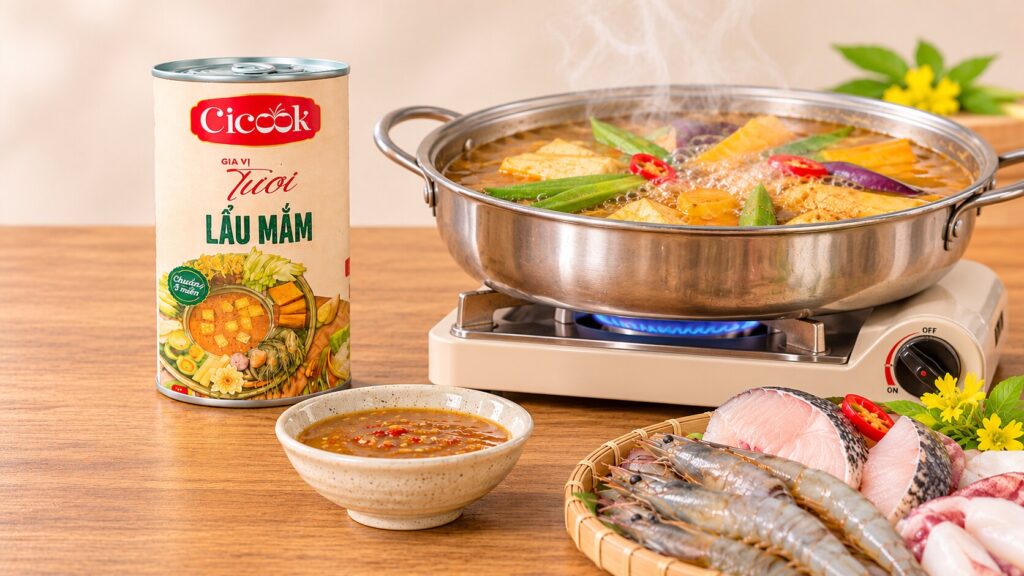
CiCook makes fermented fish hotpot bases among its contract-manufactured sauces and seasonings, under OEM, ODM and private-label models. Its facility is registered with the US FDA and certified to ISO 22000:2018, with a COA for every batch.
FAQ
Is mam ca linh the same as fish sauce?
No. It is a paste of fermented fish, and Chau Doc-style versions add roasted rice powder and palm sugar. Fish sauce is the liquid product, though linh can be used for that too.
How long does mam ca linh take to ferment?
We found no linh-only timetable. Accounts of similar field-fish pastes range from about two to three months to more than six, so the target should be agreed in the product specification.
Planning a Mekong-style hotpot base for your market? Discuss your recipe with our manufacturing team or message us on WhatsApp at +84 813 378 398.
References
- Viet Nam News (16 September 2025): An Giang Province farmers net flood-season linh bounty
- VietNamNet Global (1 August 2023): Linh fish, the specialty of Mekong Delta’s flooding season
- Sài Gòn Giải Phóng (17 September 2017): Cá linh mùa rộ
- VOH (21 September 2022): Cá linh, món quà từ mùa nước nổi
- Nhân Dân (8 October 2022): Mưu sinh mùa lũ muộn
- Báo Pháp Luật Việt Nam (30 December 2018): ‘Vương quốc mắm’ miền Tây
- VnExpress (19 November 2002): Mắm xưa và nay
- VnExpress (18 August 2022): Trăm món ngon ở An Giang
- Sài Gòn Giải Phóng (16 June 2019): Nhớ hương vị mắm đồng
- Mekong River Commission archive (undated, Vietnamese translation): Kết đàn di cư
- Cambodianess (7 June 2020): Migration of small mud carp species in the Tonle Sap system
- VnBusiness (7 February 2020): Bảo đảm an toàn lao động, đưa mắm Châu Đốc vươn xa
Compiled and edited by the CiCook editorial team from the sources listed under References. For information only; please check the original documents before making business decisions.