
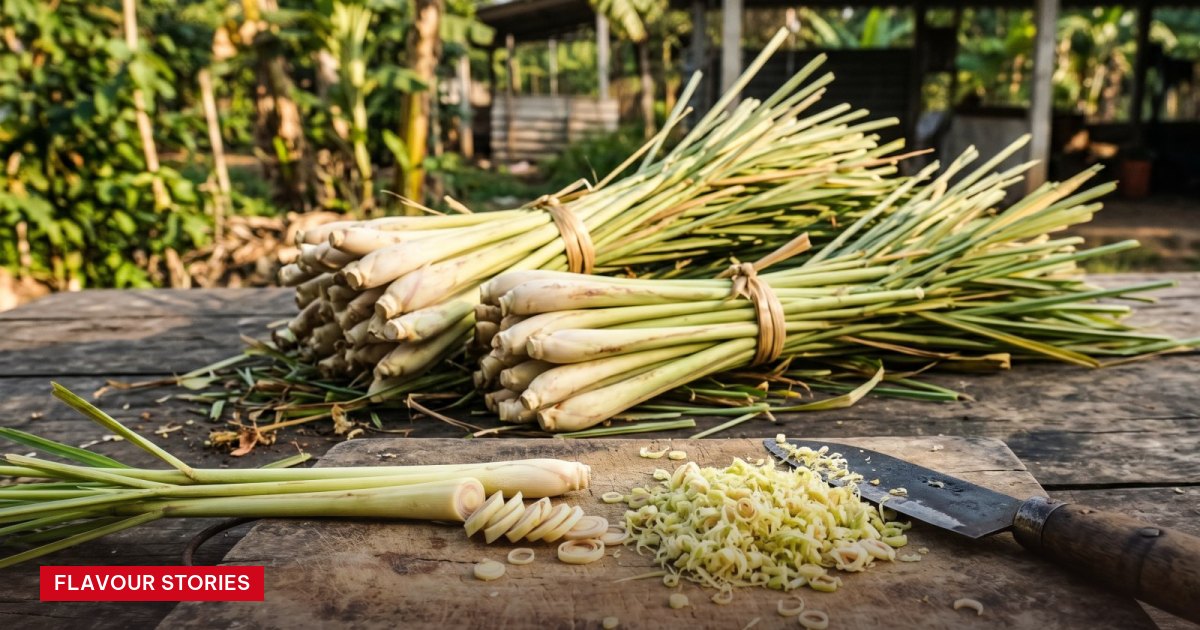
Lemongrass in Vietnamese cooking is a defining aromatic. Cooks use the pale lower stalk, smashing it for soups and mincing it for marinades. For sauce makers, the cut, the raw material and the heat step decide how much of that fresh lemon aroma survives.
1. Where does lemongrass come from, and where does Vietnam grow it?
Lemongrass (Cymbopogon citratus, sả in Vietnamese) is a clump-forming grass that Singapore’s National Parks Board describes as native to the grasslands of tropical Asia and now found only in cultivation. The same record lists its exact native distribution as unknown, so any precise birthplace should be treated with caution.
In Vietnam, one of the clearest documented growing areas is Tan Phu Dong, an island commune in Dong Thap. A July 2025 report in Bao Lao Cai counted 4,020 hectares of specialised lemongrass there, yields of 15–17 tonnes per hectare and two to three crops a year. The collective trademark “Sả Tân Phú Đông” dates from April 2019.
Not every Vietnamese lemongrass field supplies the kitchen. In the northern uplands, Tap chi Cong Thuong reported in 2023 that Tram Tau farmers grow sả Java mainly for essential oil, whose main constituents are citronellal, citronellol and geraniol. By contrast, a study of steam-distilled oil from Tan Phu Dong measured 86.90% citral, the compound family behind the lemon note.
2. Flavour and how it is used
Lemongrass tastes of lemon without the sourness. Britannica describes a rich lemon flavour with no acidity and hints of camphor and mint in fresh stalks. Chef Charles Phan, quoted in The Week, calls it “one of the defining flavors” of Vietnamese cooking, from beef stew to caramelised shrimp. When southern cooks want real sourness, they turn to tamarind, the souring agent behind canh chua. In the northern hills of Lang Son, the aromatic of choice for whole roasts is mac mat, a fragrant leaf stuffed into roast pork and duck.
Which part of the stalk do cooks use?
Cooks use the white and pale green lower end, because the upper green part is tough and fibrous. Delightful Plate, a Vietnamese recipe site, advises peeling one or two dry outer layers first. It also notes that the ingredient appears far more in southern-style cooking than in northern cuisine.
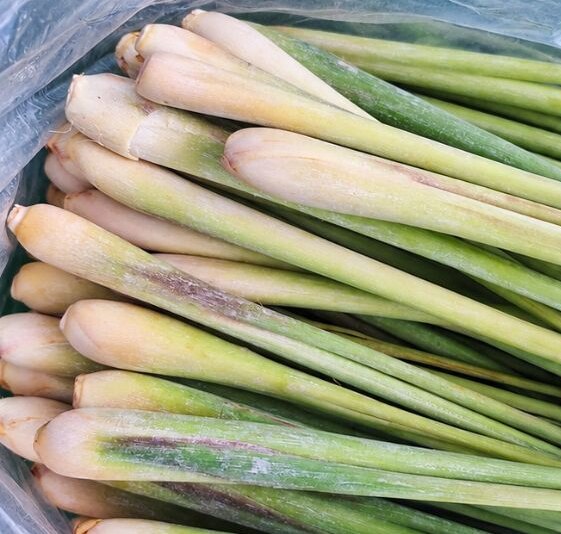
The cut changes the job the ingredient does. We compiled the table below from the cited cooks and reference works; the last column is our own reading for anyone writing a sauce brief.
| Preparation | Typical use | What it means for a sauce brief |
|---|---|---|
| Chopped coarsely and smashed, then slow-simmered | Soups and stews | Works as an infusion; decide whether pieces are strained out |
| Sliced thinly or minced | Marinades and stir-fries | Particle size becomes part of the product; agree it on the sample |
| Chopped very finely by hand | Garnish | Texture is visible, so machine cutting needs a side-by-side check |
| Pounded in a tall mortar with garlic and makrut lime leaf | Curry paste | A paste format suits a concentrated base |
Grilled pork shows the proportions in practice. Andrea Nguyen’s recipe for thịt heo nướng sả uses one trimmed stalk, about three tablespoons when finely chopped. The meat marinates for 30 minutes at room temperature or up to 24 hours chilled, then goes with rice plates, noodle bowls or banh mi.
| Key fact | Detail |
|---|---|
| Botanical name | Cymbopogon citratus, grass family (Poaceae) |
| Documented Vietnamese growing area | Tan Phu Dong, Dong Thap: 4,020 ha (reported July 2025) |
| Harvest pattern there | Two to three crops a year |
| Characteristic flavour | Lemon without acidity, with hints of camphor and mint |
| Typical uses | Marinades, soups, stews, stir-fries |
| Origin protection | Collective trademark “Sả Tân Phú Đông” (April 2019) |
For another aromatic that shapes Vietnamese marinades, see our guide to galangal in northern Vietnamese cooking. Lemongrass often shares the pot with another citrus-scented herb, as our story on lime leaves in Vietnamese chicken dishes explains.
3. From traditional kitchen to packaged product
Moving lemongrass from a home marinade to a packaged sauce raises three practical questions: which raw material, in what form, and how much heat.
3.1 How should buyers specify the raw material?
Name the species and the plant part in the specification, not just “lemongrass”. The Tan Phu Dong report covers leaves cut for steam distillation as well as a crop sold as a spice, and it quotes a trader price of 4,500–5,000 VND per kg as of July 2025. Treat that as a dated market marker, not a sourcing price for food-grade stalks.
3.2 Can frozen or dried lemongrass replace fresh?
Frozen is the safer swap. Nguyen writes that the signature flavour is best from fresh or frozen stalks, and she offers about 1½ teaspoons of ground lemongrass as a stand-in for one stalk. Drying conditions also matter: a 2023 Scientific Reports study of dried leaves measured oil yields from about 1.34% to 2.09%, with hot air at 50 °C among the highest. Those figures describe leaves in a laboratory, so test your own material.
3.3 Does cooking and storage weaken the aroma?
Heat can change citral, so aroma should be judged after processing rather than only on the kitchen sample. In the Tan Phu Dong oil study, citral fell from 86.90% to 79.24% after a month at 45 °C. That was bare essential oil tested for cosmetics, not a sauce, so it signals a risk rather than a shelf-life figure.
A short trial checklist helps:
- Compare the kitchen sample with a sample that has been through the full heat step.
- Taste again after storage in the final pack, since the choice of bottle, jar, can or pouch shapes the process as well.
- For US-bound products, check early whether FDA acidified foods rules apply to the recipe.
CiCook runs three factories and makes hotpot bases, dipping sauces and BBQ marinades under OEM, ODM and private label; its sauce and seasoning range shows the formats available.
FAQ
Can lemongrass be frozen for marinades?
Yes. Both Andrea Nguyen and Delightful Plate treat frozen stalks as a workable option, and Nguyen ranks fresh or frozen above dried for flavour.
Is Java lemongrass the same as cooking lemongrass?
Treat them separately. Vietnamese reports describe sả Java as grown mainly for oil rich in citronellal, so a sauce buyer should confirm the species and intended use with the supplier.
Planning a lemongrass sauce or marinade? Send your brief to the CiCook team or message WhatsApp +84 813 378 398.
References
- National Parks Board Singapore (record updated 14 October 2025): Cymbopogon citratus
- Encyclopaedia Britannica (undated, accessed November 2026): Lemongrass
- Bao Lao Cai (29 July 2025): Phát triển cây sả theo hướng bền vững ở xã cù lao
- Tap chi Cong Thuong (30 October 2023): Trạm Tấu – Đổi thay từ trồng sả lấy tinh dầu
- The Week (3 October 2012): Lemongrass: Vietnamese cuisine’s not-so-secret ingredient
- Andrea Nguyen, Viet World Kitchen (21 April 2009, updated May 2026): Vietnamese restaurant-style grilled lemongrass pork
- Delightful Plate (27 November 2017, updated April 2023): Lemongrass (Sa)
- Setareh et al., Scientific Reports (1 November 2023): Hot-air, infrared and hybrid drying techniques for lemongrass
- Tran et al., De Gruyter (DOI 10.1515/chem-2021-0066): Color and composition of beauty products formulated with lemongrass essential oil
Compiled and edited by the CiCook editorial team from the sources listed under References. For information only; please check the original documents before making business decisions.