
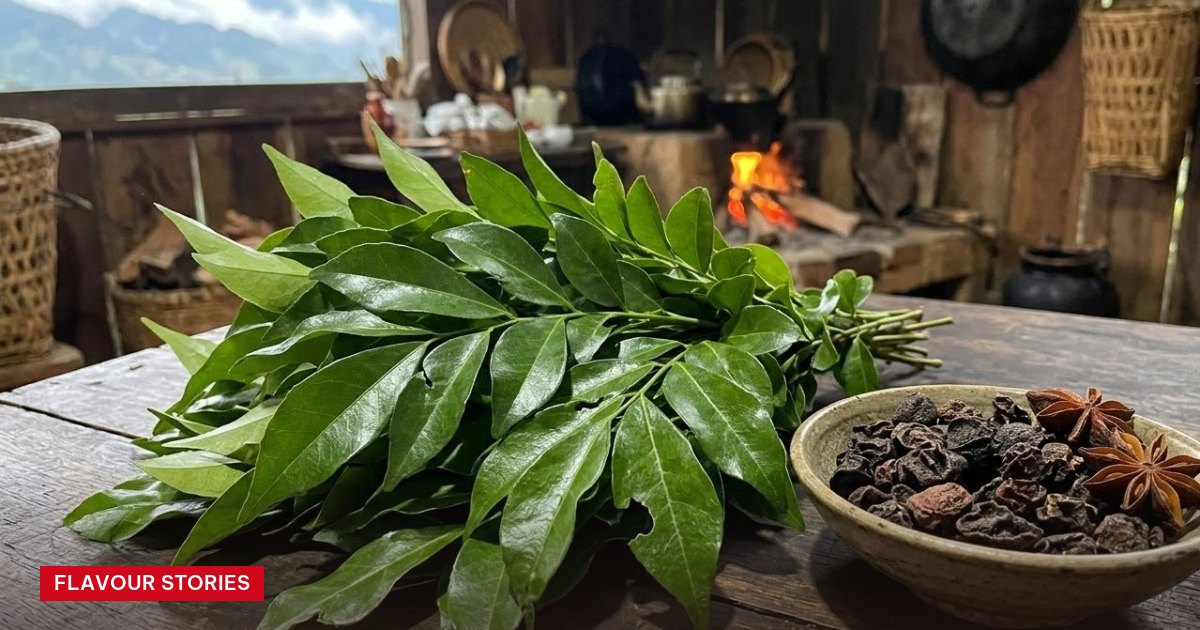
Mac mat (Clausena indica) is a small tree of northern Vietnam’s limestone hills, grown mainly in Lang Son, Cao Bang and Quang Ninh. Its fragrant leaves are stuffed inside Lang Son roast pork and roast duck, while the sweet-sour fruit, ripe in July and August, is pickled, braised or dried.
1. What is mac mat and where does it grow?
Mac mat (written mắc mật or mác mật in Vietnamese) is a small tree identified as Clausena indica. In the Tày and Nùng languages of the northern highlands its name means “sweet fruit”, according to both Viet Nam News and Heritage magazine.
Báo Pháp Luật Việt Nam reports that the tree is grown mainly in Lang Son, Cao Bang and Quang Ninh, often in gardens beside village homes. Other reports describe it growing wild in the forests and on the stony mountains of Lang Son, which is why the herb is so closely tied to this border province.
The tree flowers in April and May and its fruit ripens from July to August. Villagers quoted by Viet Nam News put the harvest between the late seventh and late eighth lunar months. Outside that window, cooks rely on dried fruit and ground seed powder so the flavour is available all year.
2. Flavour and how it is used
Mac mat leaves carry an aromatic essential oil with a light pungency, while the ripe fruit is mildly sweet and sour. Viet Nam News notes that cooks value the leaves for removing the strong smell of duck. Descriptions of the fruit vary: Heritage magazine calls it slightly peppery with a bitterness like grapefruit peel, so flavour likely shifts with ripeness and preparation. Another leaf that Vietnamese cooks shred over poultry is the lime leaf, covered in our story on how lime leaves season Vietnamese chicken.
How are mac mat leaves used in Lang Son roast pork?
For lợn quay, the cook fills the pig’s stomach cavity with mac mat leaves, chilli, garlic and wild lime, then sews it shut. A report by Nhan Dan, republished by VTV, describes a 25 or 50 kg pig turned on a spit for about three hours and brushed with a honey-and-spice sauce. Roast pork is also a customary gift between families at Tày weddings.
What goes into mac mat roast duck?
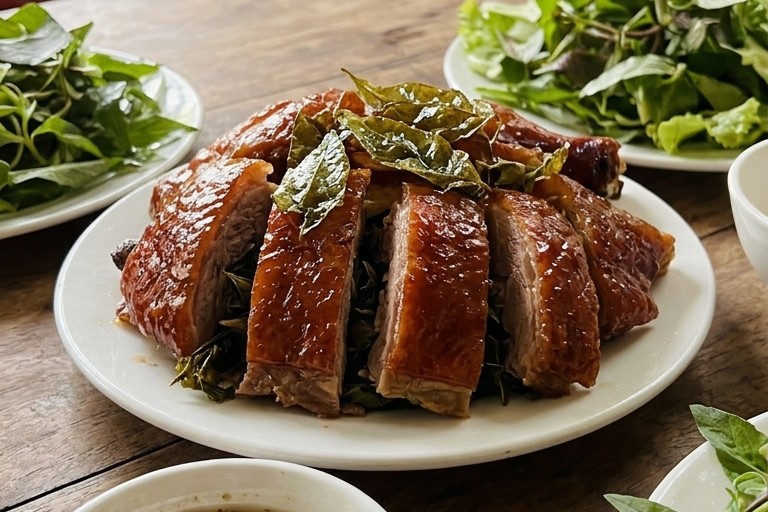
Lang Son roast duck uses minced mac mat leaves as the heart of the stuffing. Viet Nam News lists dried onion, garlic, chilli, honey, salt, sugar and pepper alongside the leaves. VnExpress International adds cardamom and anise, and describes the duck being roasted over coals for 15 minutes, then deep-fried for another 15.
What about the fruit and seeds?
- Fresh fruit: eaten raw, or simmered whole with pork in khau nhuc, a stewed pork dish of the Tày and Nùng in Lang Son (Heritage).
- Pickles: bamboo shoots pickled with mac mat fruit and chilli in light brine, ready after about two weeks (Viet Nam News).
- Grilling: pork ribs marinated overnight with the fruit, and bass grilled and served with a sweet-sour mac mat sauce (Heritage).
- Seed powder: seeds dried and ground into a spice for marinades (Báo Pháp Luật Việt Nam).
| Key fact | Mac mat (Clausena indica) |
|---|---|
| Main growing areas | Lang Son, Cao Bang, Quang Ninh; wild in Lang Son’s forests and stony hills |
| Local name meaning | “Sweet fruit” (Tày–Nùng) |
| Flowering | April–May |
| Fruit harvest | July–August (late 7th to late 8th lunar month) |
| Leaf flavour | Aromatic essential oil, light pungency |
| Fruit flavour | Mildly sweet and sour; some describe a peppery, bitter note |
| Parts used | Leaves, fruit, seeds |
| Signature dishes | Roast pork (lợn quay), roast duck (vịt quay), khau nhuc, pickled bamboo shoots |
| Year-round forms | Dried fruit, ground seed powder |
3. From traditional kitchen to packaged product
Brands that want to bottle a “Lang Son roast” flavour face a basic gap: the traditional dish relies on fresh leaves sealed inside the meat, while a shelf-stable marinade or sauce has to carry the aroma in another form. The same challenge appears with other fresh herbs, as our story on how galangal travels from cha ca to packaged sauce shows.
- Plan around the season. Fresh fruit is available only for a few weeks in July and August, so agree early on whether the recipe uses leaves, dried fruit or seed powder.
- Define the flavour target. Because the fruit is described as sweet-sour by some and peppery-bitter by others, benchmark samples against a real Lang Son roast rather than a written description.
- Build the full profile. In the traditional stuffing, mac mat sits alongside garlic, chilli, honey, pepper and anise; a marinade that uses mac mat alone will taste incomplete.
- Name the ingredient clearly. For export labels, pair the Vietnamese name with the botanical name Clausena indica so importers and regulators can identify it.
- Keep claims culinary. Describe origin and taste, and avoid health claims on packs and listings.
CiCook makes BBQ sauces and marinade packs for private-label brands, including mac khen (wild pepper) sauces, under OEM, ODM and private-label arrangements. Its facility is registered with the US FDA and certified to ISO 22000:2018, with a COA issued for every batch.
FAQ
What are mac mat leaves used for?
Mac mat leaves are mainly stuffed inside Lang Son roast pork and roast duck, together with garlic, chilli and other spices. Their aromatic oil perfumes the meat and helps remove the strong smell of duck.
When is mac mat in season?
Mac mat flowers in April and May, and the fruit ripens from July to August. Outside the season, cooks use dried fruit or ground seed powder.
Developing a sauce or marinade inspired by northern Vietnamese flavours? Talk to our product development team or message us on WhatsApp +84 813 378 398.
References
- Viet Nam News (23/03/2021): Mác mật fruit and leaf hard to beat in northeast
- Báo Pháp Luật Việt Nam (18/01/2021): Mắc mật – nét tinh hoa của ẩm thực Xứ Lạng
- VTV News / Nhan Dan (08/04/2019): Roast pork – a speciality of Lang Son province
- Heritage Vietnam Airlines (04/07/2023): Forest fruit
- VnExpress International (16/03/2016): Signature dishes of Lang Son province
Compiled and edited by the CiCook editorial team from the sources listed under References. For information only; please check the original documents before making business decisions.