When you look for a sauce or seasoning manufacturer, you will meet three terms: OEM, ODM and private label. They sound alike, but they differ on three things that matter: who holds the formula, who does the development work, and how long it takes to get product on the shelf.
OEM: made to your formula
With OEM, you already have a recipe. It might be a restaurant’s house dipping sauce, or a sauce you have been making by hand and want to scale. The factory takes your formula, runs trials to match your reference sample, then standardises dosing and process for consistent production.
- Who owns the formula: you.
- Best for: restaurant chains, brands already selling a handmade product, anyone who wants to keep full control of their recipe.
- Watch out for: kitchen recipes usually need adjusting for industrial production to stay stable and reach the shelf life you need. Choose a partner that signs a non-disclosure agreement (NDA) before you hand over the formula.
ODM: a new formula developed with you
With ODM, you have an idea but no formula. You describe the flavour, market and target price, and the factory’s R&D team develops a formula, makes samples and refines them with your feedback until you approve.
- Who does R&D: the factory, following your direction.
- Best for: new brands, companies extending a product line, importers who need flavours tuned to their market.
- Watch out for: the clearer your brief (what it is eaten with, heat level, sweetness, reference products), the fewer sample rounds you need.
Private label: an existing product under your brand
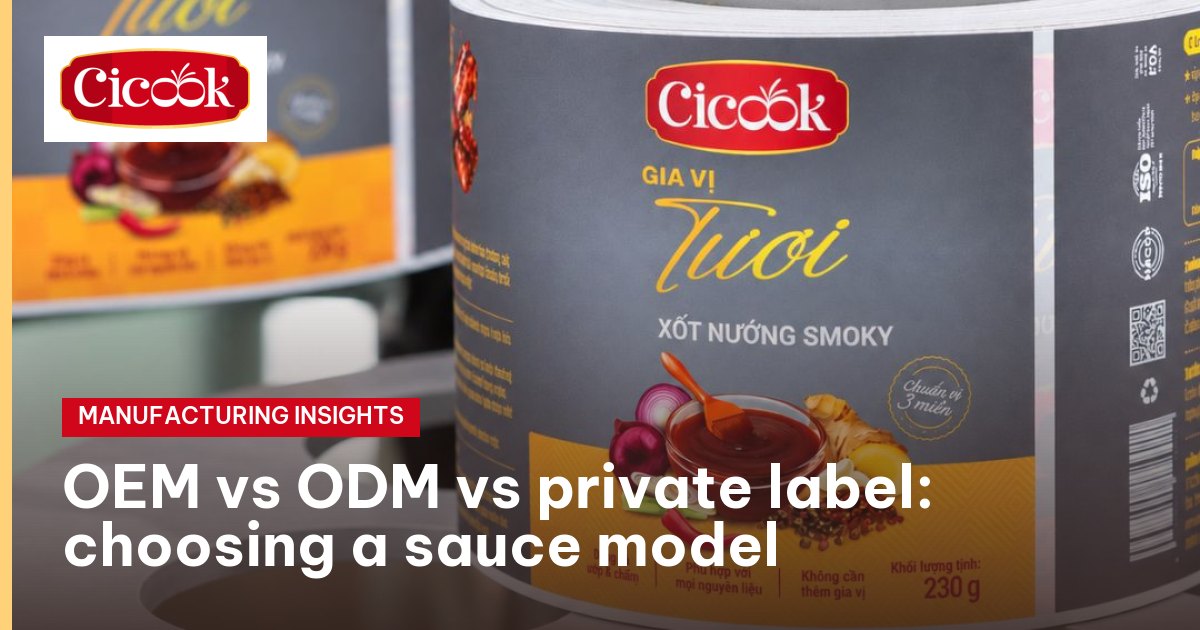
With private label, you choose from products the factory already makes reliably, packed in your packaging and label. It is the fastest route to market because the formula and process are already proven.
- Best for: distributors, retailers and online stores that want their own range without investing in R&D.
- Watch out for: the formula is not exclusive. To stand out, you can start with private label and move to ODM over time.
Quick comparison
| OEM | ODM | Private label | |
|---|---|---|---|
| Formula | Yours | Developed for you | Factory’s existing |
| R&D | Standardising your formula | Done by the factory | Not needed |
| Time to market | Medium | Longest | Fastest |
| Differentiation | High | High | Lower |
Which one should you choose?
Start with one question: do you already have a formula? If yes, choose OEM. If not, but you want a product with its own identity, choose ODM. If speed and low upfront cost come first, choose private label. Many brands combine all three: private label to test the market, then ODM for their hero product.
At Cicook, all three models run through the same quality system in a facility that is FDA-registered (USA) and certified to ISO 22000:2018 and HACCP. Not sure which model suits you? Contact Cicook for a free consultation.
Compiled and edited by the Cicook editorial team from the sources listed under References. For information only; please check the original documents before making business decisions.