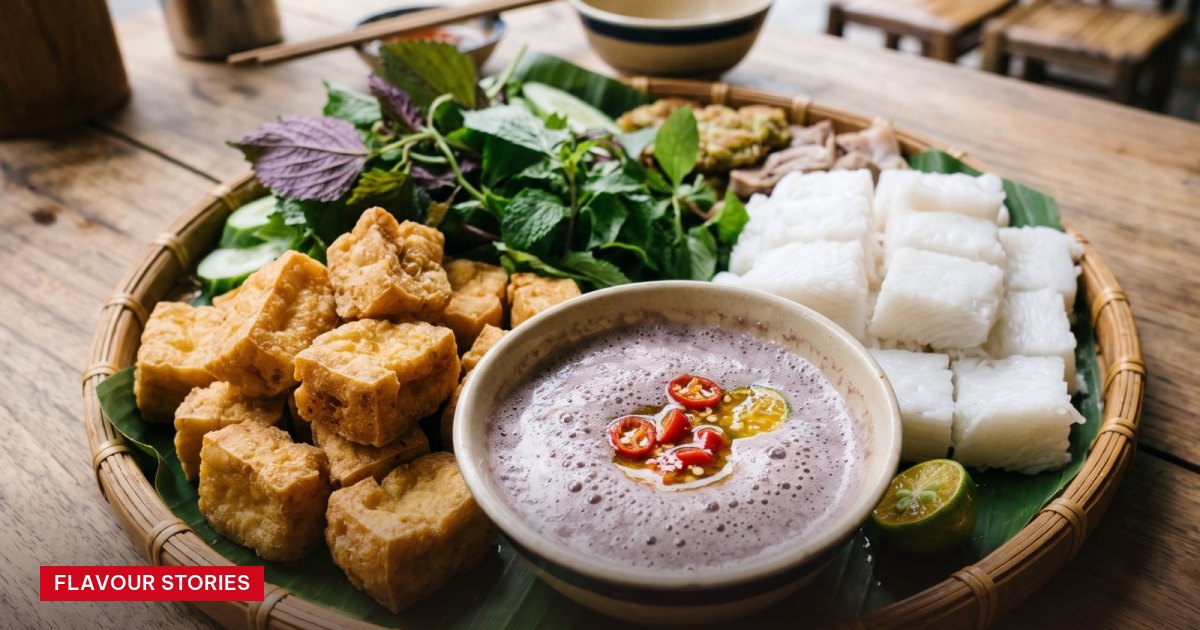
Mam tom is a purple, smooth fermented shrimp paste from northern Vietnam, made by fermenting tiny sea shrimp called moi with salt. Hau Loc in Thanh Hoa was granted a geographical indication for it in 2010. Mixed with sugar and lime, it is the dip for bun dau.
1. Where does mam tom come from?
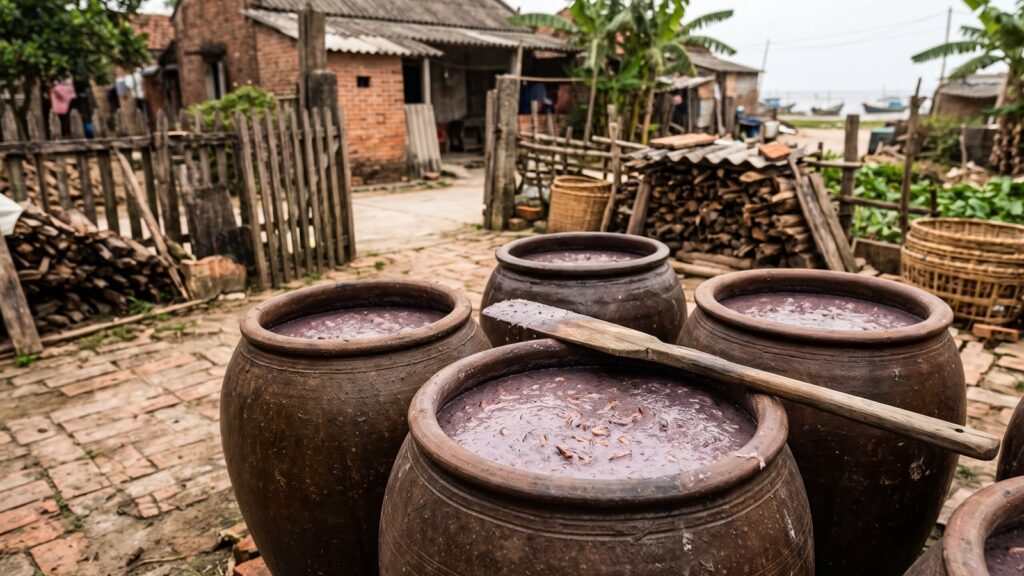
The best-known version comes from Hau Loc, a stretch of coast in Thanh Hoa province, north-central Vietnam. A May 2023 report on the Ministry of Industry and Trade portal says it is made only from salt and sea moi (Acetes japonicus) caught off Hau Loc, along a 12 km coastline between the Lach Truong and Lach Sung estuaries.
According to the same report, the craft dates back to the founding of Diem Pho fishing village in the 12th century, nearly 800 years ago. On 25 June 2010, Vietnam’s Intellectual Property Office issued geographical indication certificate No. 00019 for “Hau Loc” shrimp paste, a protection VnExpress also noted in 2014.
Moi is a shrimp, not a fish. SeaLifeBase lists Acetes japonicus as the Akiami paste shrimp, a member of the Sergestidae family that lives in shallow coastal waters over muddy bottoms and grows to about 3 cm. The ministry’s report adds that Hau Loc moi measure 11–22 mm and are caught from September to December.
2. Flavour and how it is used
Mam tom is pungent and salty with a sweet finish. VnExpress describes the traditional Hau Loc paste as purple, thick and smooth, with no salt grains left. A 2025 VnExpress guide to regional mam explains that enzymes in the moi break down protein during fermentation, giving the paste its ripe-berry purple or pale pinkish-purple colour.
How do Vietnamese cooks eat mam tom?
Mostly as a dip. Cooks loosen the paste with sugar and lime juice and serve it with rice vermicelli, fried tofu and pork, the combination behind bun dau mam tom, which VnExpress calls a popular dish in many provinces. It also seasons noodle soups such as bun rieu and bun thang; the Michelin Guide lists shrimp paste among the seasonings of Hanoi’s bun rieu crab noodle soup. Central Vietnam’s counterpart, mắm nêm, a fermented anchovy dip mixed with pineapple, is served in a similar way with rice vermicelli and pork.
In Thanh Hoa itself, the 2025 VnExpress guide pairs it with ca lang nuong rieng me, catfish grilled with galangal and fermented rice (mẻ), eaten with perilla and Thai basil.
| Key fact | Detail (Hau Loc shrimp paste) |
|---|---|
| Raw materials | Sea moi (Acetes japonicus) and salt |
| Production area | Coastal communes of Hau Loc, Thanh Hoa, between the Lach Truong and Lach Sung estuaries |
| Moi season and size | September to December; 11–22 mm |
| Colour and texture | Purple, thick and smooth, no salt grains |
| Characteristic flavour | Pungent and salty with a sweet finish |
| Typical uses | Dip for vermicelli, tofu and pork; seasoning for bun rieu and bun thang |
| Origin protection | Geographical indication No. 00019, granted 25 June 2010 |
Is mam tom the same as mam ruoc?
No. Vietnam has several shrimp pastes, and the names are not interchangeable on a menu or a label. We compiled the comparison below from the two VnExpress articles cited above.
| Paste | Example region | Raw material | Look | Typical use |
|---|---|---|---|---|
| Mam tom | Thanh Hoa (Hau Loc) | Sea moi and salt | Purple, smooth paste | Dip with sugar and lime; soup seasoning |
| Mam ruoc | Long An | Ruoc, small shrimp of brackish or coastal water | Dark pink, pungent, salty-sweet | Stir-fried with pork and lemongrass |
| Mam tom chua | Hue | Fresh striped shrimp (tom ran) | Red, shrimp left whole | Sour-fermented side dish |
3. From traditional kitchen to packaged product
Turning a village paste into a packaged condiment raises a few decisions that are best settled on paper first. The points below are our reading of the sources for sauce buyers, not a production standard.
3.1 What should the raw material specification say?
Name the species and the source, not just “shrimp”. The Hau Loc description ties quality to Acetes japonicus of a defined size and season, and it notes that the amount of salt is adjusted to the quality of the raw moi. Salt level, colour and smoothness should therefore be agreed against an approved sample, not a fixed recipe alone. The same applies to dry shrimp condiments such as Tay Ninh’s roasted chilli shrimp salt.
3.2 Plain paste or ready-to-dip?
Plain paste suits cooks who season soups; a version pre-mixed with sugar and lime suits diners who want the bun dau dip straight from the jar. The two behave differently in the pack, so treat them as separate products with their own shelf-life trials, and choose a closure that keeps a strong aroma sealed in.
3.3 What labelling issues come with shrimp?
Shrimp is a crustacean shellfish, one of the nine major food allergens under US law. The FDA’s food allergy page (current as of 11 March 2026) says labels must name the species, such as shrimp, in the ingredient list or a “Contains” statement. Our FDA allergen labeling checklist for Asian sauces walks through the details.
Other fermented pastes raise similar questions about raw material and aroma; the Mekong Delta’s flood-season mam ca linh is made from freshwater fish rather than shrimp. CiCook makes dipping sauces, hotpot bases and BBQ marinades under OEM, ODM and private label in an FDA-registered facility; its range of sauces and seasonings shows the current formats.
FAQ
What is mam tom made from?
The Hau Loc paste is made from sea moi (Acetes japonicus), a tiny shrimp, fermented with salt. The salt level is adjusted to the quality of the catch.
What is mam tom eaten with?
As a dip, it is mixed with sugar and lime juice for rice vermicelli, fried tofu and pork. It also seasons noodle soups such as bun rieu and bun thang.
Developing a shrimp paste dip or another Vietnamese condiment? Send your product brief to the CiCook team or message WhatsApp +84 813 378 398.
References
- Ministry of Industry and Trade portal (17 May 2023): Mắm tôm Hậu Lộc tiếp tục chinh phục những thị trường khó tính
- VnExpress (12 May 2025): 8 món mắm nổi tiếng ba miền
- VnExpress (9 September 2014): Các loại mắm nổi tiếng dọc miền đất nước
- SeaLifeBase (accessed November 2026): Acetes japonicus, Akiami paste shrimp
- Michelin Guide (21 December 2023): Beyond pho: 5 must-try dishes in Hanoi
- US Food and Drug Administration (11 March 2026): Food allergies
Compiled and edited by the CiCook editorial team from the sources listed under References. For information only; please check the original documents before making business decisions.